




What if the most important video decision happens before the camera rolls? A polished film can still miss its mark if it does not answer a real audience question or support a clear communication goal. The work of a video production agency starts by defining what the film needs to achieve, then carrying that purpose into every creative and production choice.
It is natural to feel unsure where to begin, what to include in a brief or how strategy connects with the finished edit. Start with the audience, message and desired outcome. These give the project a clear direction while leaving room for creative ideas.
This guide takes you through purposeful video production, from shaping the brief to planning, filming and post-production. You will learn how to align audience insight, messaging, creative direction and deliverables, then assess whether the finished film serves its intended purpose. At EQ4 Brand Architects, video production works alongside communication strategy, animation, visual effects and sound design, helping each element support a broader brand communication goal.
Key Takeaways
- A video production agency can connect audience insight and creative direction with the practical work of filming and editing.
- Map the journey from initial concept to final delivery, clarifying the purpose and key decisions at each stage.
- Use a focused brief to align your audience, objective, message, tone, channels and required outputs.
- Agree review rounds and decision-making responsibilities early to keep stakeholders aligned and the project on track.
- Position video within your wider brand communication strategy so its message and visual direction work alongside other touchpoints.
What does a video production agency do, and when is one useful?
A video production agency turns a communication goal into a planned, crafted film, rather than simply recording footage. A video production agency is a creative partner that connects audience insight, storytelling and production to make purposeful video content. Its work can include identifying what an audience needs to know, shaping the creative direction, planning and filming, then refining the material through post-production.
This support is useful when a business has a message to communicate but needs to decide how video can make it clearer, more engaging or easier to understand. Start with one question: What should the audience understand, feel or be able to do after watching? The answer helps establish whether video suits the communication need and gives the creative work a clear point of reference.
Which business communication goals can video support?
Start with the audience’s need, then choose a format to serve it. If people find a complex offer difficult to understand, an explainer could clarify its value and how it works. If an unfamiliar brand needs to introduce its purpose and personality, a brand film could offer a more human introduction. For a campaign, video might bring a central message to life in a clear, memorable way.
These are different communication goals, not automatic reasons to make a particular type of video. A short clip, animation or filmed interview is a creative choice. The underlying question is what the audience needs to understand. Matching the format to that need helps keep production purposeful.
What is the difference between production and post-production?
Production is the planning and capture of visual and audio material. This can include developing the concept, organising what is needed for filming, and recording footage, interviews, voice or other sounds. Preparation matters: the setting, contributors and visual approach should all support the intended message.
Post-production shapes the captured material into a finished film. Editing establishes structure and pace; sound design develops the audio; visual effects (VFX), animation, colour and other finishing choices refine what viewers see and hear. The stages are connected, but they solve different creative problems. The Video Production Overview outlines the wider process, while EQ4’s visual effects agency guide explores how VFX can contribute to a film’s creative direction.
How does a video production move from idea to finished film?
A clear workflow gives the team room to make creative choices without losing sight of the purpose. A video production agency can guide the project through connected stages, adapting the process to the format, audience and intended use. Some projects need animation or interviews; others may work well as a simple filmed message. The decisions at each stage should suit the project, rather than follow a rigid template.
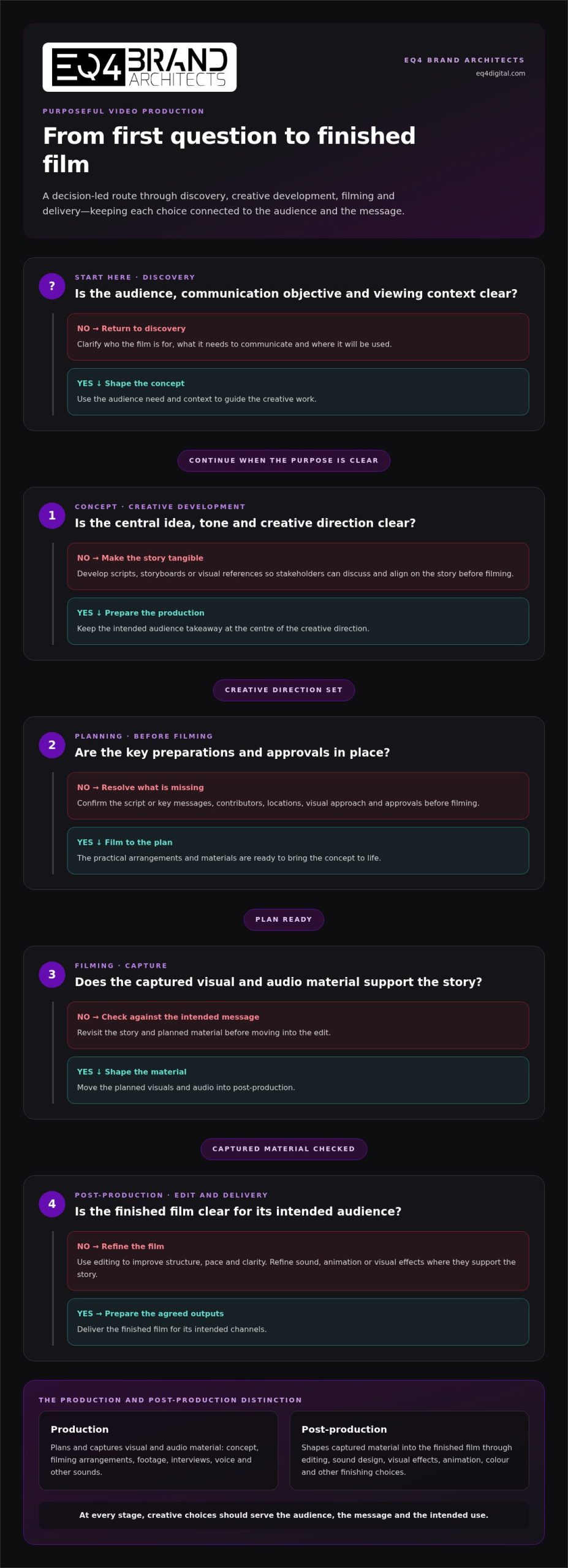
A video moves from discovery and creative development through planning, filming, post-production and delivery, with the route shaped around its purpose.
- Discovery: Establish who the video is for, what it needs to communicate and where it will be used. Align on the communication objective and the context the audience needs before developing ideas.
- Concept: Turn those inputs into a central idea, tone and creative direction. Decide what the audience should take away and how the story can express it clearly.
- Planning: Prepare the materials and practical arrangements needed to bring the concept to life. Confirm the script or key messages, contributors, locations, visual approach and approvals before filming.
- Filming: Capture the planned visuals and audio, keeping each scene or interview connected to the story. Check that the material supports the intended message.
- Post-production and delivery: Shape the footage through editing, sound and any relevant motion or visual effects. Review the film for clarity, then prepare the agreed outputs for their intended channels.
How do discovery and creative development shape the concept?
Discovery brings the audience, communication objective and viewing context into focus. A film introducing a brand to people encountering it for the first time may need a different tone from one explaining a detailed service to existing clients. These insights inform the central idea and creative direction. Scripts, storyboards or visual references give stakeholders something concrete to discuss before filming. This helps them align on the story before production begins, rather than relying on conflicting preferences later.
What happens during filming and post-production?
Filming captures the material planned for the concept, whether that means interviews, action, product details or designed visuals. In post-production, editing shapes the story, pace and clarity for the intended audience. Sound design can strengthen atmosphere or improve intelligibility, while animation and visual effects should have a clear storytelling role. For example, motion graphics can make an abstract process easier to follow. If you’re developing a film, EQ4’s video production and communication strategy can help bring its creative choices into focus.
How do you prepare a video production brief that keeps the project focused?
A useful brief gives the creative and production teams a shared reference point. It doesn’t need to prescribe every shot, but it should explain who the video is for, what it needs to communicate and where it will appear. A video production agency can use that clarity to shape creative decisions around the project’s purpose, rather than relying on assumptions or competing opinions.
Which questions should a video brief answer?
Begin with the viewer: who needs to understand, feel or do something after watching? Then define the most important message and the context viewers need to make sense of it. Name the intended channels, accessibility considerations and known delivery requirements, such as versions for different placements. These details help the creative approach fit both the audience and the way they’ll encounter the film.
Use this checklist as a starting point:
- Audience: Who is the video for, and what do they already know?
- Objective: What communication need should it address?
- Key message: What is the one idea viewers should remember?
- Tone and direction: How should the film feel, and what visual references may help?
- Channels and outputs: Where will it appear, and what versions or formats are required?
- Accessibility: What considerations, such as captions or readable on-screen text, should inform the work?
- Approvals: Who makes decisions, and how will feedback be gathered?
How can stakeholders make feedback more useful?
Name one lead decision-maker and agree who will contribute before reviews begin. Gather comments into a single set, then connect each suggestion to the audience, objective or agreed creative direction. Separate factual corrections, which are needed for accuracy, from preferences about style. Clear visual references can also help align feedback with the brand’s established identity. The branding and design guide explores how consistency supports recognition.
Agree review stages, timing and how feedback will be resolved if stakeholders disagree. Mark essential requirements, such as accurate product details or a specified format, and distinguish them from preferences that can remain open to creative interpretation. This keeps reviews focused while leaving room for craft.
To brief a project with a clear audience, message and creative direction, discuss your video production brief with EQ4.
How can you make video production support a wider brand communication strategy?
A video has more value when it plays a clear role in the communication around it. As part of a campaign, it might introduce a central idea, explain it in more detail or provide a human perspective that complements written and visual content. Plan how it connects with other touchpoints, such as a website, public relations activity or brand activation, so audiences encounter a coherent message rather than disconnected creative work.
Consistency doesn’t mean every channel needs identical content. It means the core message, tone and visual direction feel recognisable, while each format is shaped for its context. A video production agency can help translate that shared direction into film choices that fit the wider brand experience.
How should distribution and measurement follow the objective?
Decide where the intended audience is most likely to encounter relevant communications, then plan distribution for those channels. A film designed to clarify a service for prospective clients may need a different placement and edit from a video introducing a campaign to existing stakeholders. Let the objective guide both the distribution approach and what you assess afterwards.
Choose measures that reflect the original purpose. If the goal is attention, review whether the intended audience is watching. If the aim is understanding, use audience feedback or questions to identify what is clear and what needs refinement. If you want viewers to take a specific next step, consider whether they do so. Treat findings as useful learning for future communication, not as proof that a film alone caused a business result.
When does integrated creative support add value?
Animation can clarify an abstract process; visual effects can help express an idea that would be difficult to film; and sound design can shape the mood or make information easier to follow. Each choice should support the message and audience, rather than simply add polish. If a simpler treatment communicates more clearly, restraint may be the stronger creative decision.
EQ4 brings strategic communication together with video production, animation, visual effects and sound design, connecting creative decisions to the broader brand direction. If you’re shaping a film as part of a wider communications plan, explore a purposeful video production conversation with EQ4.
Give your next video a clear starting point
Before planning a shoot, define the conversation you want to have with your audience. What could they understand more clearly, or what perspective might help them engage with your brand? The answer can guide the film’s creative direction and keep decisions purposeful as the project develops.
A video production agency can be a thoughtful partner in turning that intention into a film, especially when the project needs to sit within a broader brand narrative. EQ4 brings video production together with communication strategy and creative direction, with visual effects, animation and sound design available to support the idea where they fit. The right creative approach depends on what the audience needs, not on adding elements for their own sake.
If you’re ready to shape a film around a meaningful communication goal, explore how EQ4 can shape a purposeful video production. Start with a clear audience need and a message worth communicating.
Frequently Asked Questions
What does a video production agency do?
A video production agency helps an organisation turn a communication need into a finished film. Strategic work clarifies the audience and intended response; production captures the planned material; and post-production shapes it through editing, sound and finishing. An internal leadership update, for example, may need a different approach from a public-facing brand film. The agency’s role is to align those choices, not simply supply cameras or footage.
How do I plan a video production from start to finish?
Begin by confirming the audience, purpose and intended viewing context, then develop a concept that addresses them. Plan the script or key messages, visual approach, contributors and practical requirements before filming. After capture, review edits for accuracy and clarity, gather feedback in one place, then prepare the agreed deliverables. An interview film may need a leaner workflow than an animation-led campaign, so tailor each stage to the project.
What should I include in a video production brief?
Include the audience, communication objective, key message, tone, intended channels and required outputs. Add useful context, such as what viewers already know, essential facts or terminology, and what the film should help them understand. Identify who approves the work and who gathers feedback. Note any required format, captioning or brand assets early so they can inform creative and production decisions.
How long does video production take?
There isn’t one standard timeline. Duration depends on the project’s scope and how much planning, filming and review it requires. A straightforward filmed message may involve fewer creative and production decisions than a multi-scene film with animation or visual effects. Contributor availability, approvals and the speed of stakeholder feedback can also affect the schedule. Agreeing responsibilities and review points early helps set realistic expectations.
How much does a video production agency cost?
The cost of a video production agency depends on the creative scope, production requirements and deliverables. A project involving several locations, contributors or animated elements has different needs from a simple filmed interview. Running time alone doesn’t define the work involved. To shape a useful estimate, clarify the intended audience, creative approach, filming requirements, post-production needs and versions required for different channels.
Can one video be adapted for different channels?
A video can often be edited into versions for different channels, provided those uses are considered during planning. A wide-format film may need a different crop, framing or pace for a vertical placement, while a shorter edit may suit a brief viewing context. Check each channel’s format and audience needs before filming. Adaptations should preserve the central message, but one version won’t automatically suit every placement.