




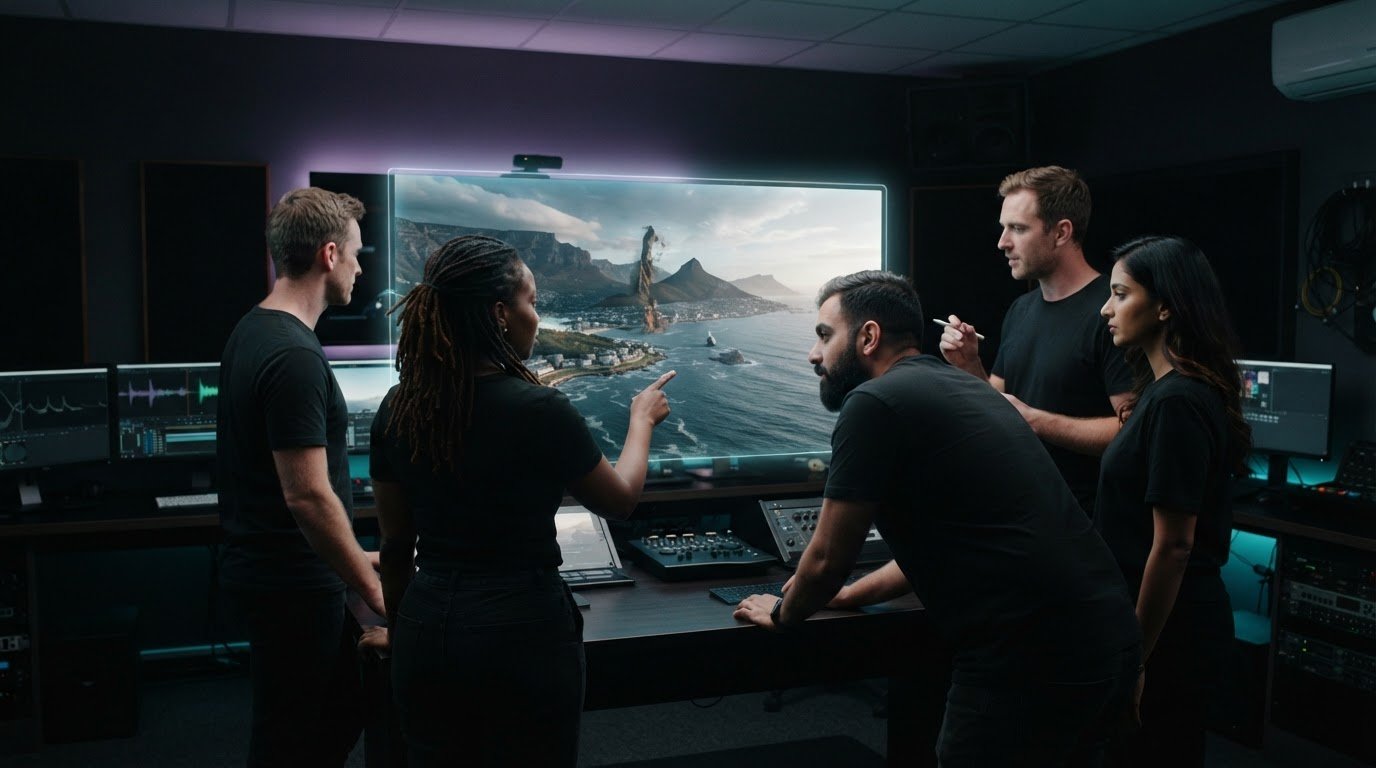
What if the most impressive VFX in your campaign is also the least useful? A visual effects agency South Africa brands choose should do more than create striking images. Its work needs to serve the audience, the message and the intended outcome. A polished showreel can demonstrate creative craft, but it won’t necessarily show whether an agency understands your brief or can connect visual effects to the wider campaign. Before production begins, it helps to be clear about what the work needs to achieve.
Start by defining the VFX scope, then assess creative direction, strategic understanding and production fit together. This guide explains how to make those decisions, what to look for beyond a showreel, and how to keep visual execution coherent with your brand purpose. At EQ4, visual effects sit alongside communication strategy, campaign strategy and creative direction, connecting what appears on screen with why it needs to be seen. Use the guidance below to shape a more considered route from brief to purposeful visual storytelling.
Key Takeaways
- Define the audience and campaign outcome first, then decide which visual effects will help make the idea clear and compelling.
- Consider how VFX can work alongside filming, animation and design to create a cohesive final asset.
- Assess a visual effects agency South Africa by the relevance of its work, strategic understanding, creative direction and approach to collaboration, not polish alone.
- Focus your brief by setting the objective, scope, creative direction and review points before production begins.
- EQ4 brings visual effects into a broader communications approach, connecting creative execution with brand and campaign strategy.
Why a visual effects agency can strengthen a South African brand or campaign
A visual effects agency creates, changes or combines imagery for screen-based content. VFX can help bring a concept to life when it would be difficult, impractical or unclear to capture with a camera alone. Its role isn’t simply to add spectacle after filming. The finished imagery should support the story the brand wants to tell.
Consider a campaign about making a complex service easier to understand. A visual treatment could turn an abstract idea into a clear, engaging scene. Or a brand may want to create a particular environment that cannot be filmed as it exists. Visual effects can help realise that direction using live footage, rather than limiting the concept to what is available on location or on set.
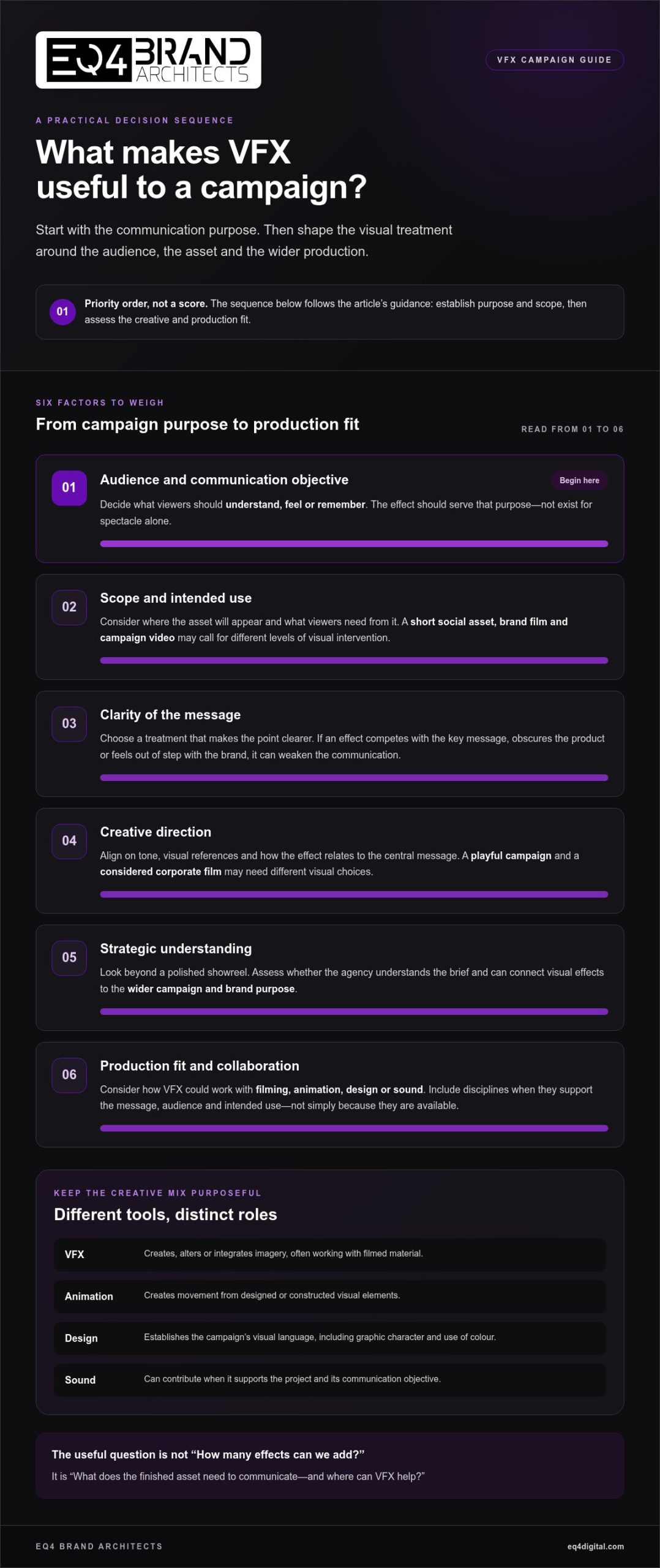
Begin with the audience and communication objective. What should viewers understand, feel or remember? A bold effect may attract attention, but attention alone isn’t a campaign purpose. If an effect competes with the key message, obscures a product or feels out of step with the brand, it may weaken the communication. The strongest treatment supports the idea, whether that means a subtle enhancement or a more imaginative scene.
Scope depends on the brief, the intended use and the creative direction. A short social asset, a brand film and a campaign video may need different levels of visual intervention, even if they share a central concept. Consider where the asset will appear, what viewers need to take from it and how VFX might work with filming, animation, design or sound. Deciding this early helps keep the creative approach coherent as production develops.
What does a visual effects agency do?
Visual effects (VFX) refers to imagery created, altered or integrated outside the live-action shot. Visual effects are processes by which imagery is created or manipulated outside the context of a live-action shot in filmmaking and video production. In practice, this might mean enhancing filmed imagery or realising a visual concept that cannot be captured directly. VFX is one part of production, guided by the purpose of the wider idea and final asset.
When can VFX serve a communication objective?
VFX can make an abstract idea easier to picture or give a campaign a distinctive visual world. The treatment should suit the message and the audience, rather than rely on effects for their own sake. Before choosing an effect, identify the point the scene needs to communicate and ask whether the treatment makes that point clearer. A distracting effect can draw attention away from the brand intention, so let the brief guide both the choice and scale of the work.
What a visual effects agency can contribute across a production
Visual effects contribute differently depending on the asset. In a brand film, they might extend a filmed environment or bring a visual idea into a scene. In a short campaign edit, a more contained treatment could carry the same creative direction into a tighter format. The useful question isn’t how many effects can be added. It’s what the finished asset needs to communicate and where VFX can support that purpose.
A visual effects agency South Africa organisations work with can also connect VFX to the wider production, rather than treating it as an isolated finishing touch. The right scope might involve filmed footage, animation, design or sound, but a brief doesn’t automatically need every discipline. Each element should contribute to the message, audience and intended use.
Where visual effects fit alongside other creative services
VFX generally alters or integrates imagery, often working with filmed material. Animation creates movement from designed or constructed visual elements. The two can meet in one asset, but they address different creative needs. Design can establish a campaign’s visual language, including its graphic character and use of colour, while VFX can carry that language into a moving scene. Video production and sound design may also contribute when they support the project.
For example, a campaign might use a consistent design direction across a film and related motion assets. VFX could adapt imagery for the film, while animation might suit a separate sequence built from graphic elements. The National Film & Video Foundation provides a wider South African context for this work: The National Film & Video Foundation (NFVF) is a statutory body mandated by parliament to spearhead the development of the South African film and video industry. For an individual project, the communication objective should determine the creative mix, not the number of services involved.
Why creative direction matters to VFX
Creative direction turns an initial idea into decisions that guide visual execution. It helps define the tone, visual references and relationship between the effect and the central message. Before developing a treatment, align on who the asset is for, where it will be used and what qualities it should convey. A playful campaign and a considered corporate film may call for very different visual choices, even when both use VFX.
Clear direction also helps keep related assets coherent. If a campaign includes several pieces of content, agree which visual elements should remain consistent and where each format can differ. This gives collaborators a shared reference without requiring every asset to look identical. EQ4 brings creative direction together with visual effects, animation, design and production as part of its broader communications practice. Discussing your creative brief with EQ4 can help connect the asset you need to its wider communication purpose.
How to compare visual effects agencies in South Africa
A showreel can make a strong first impression, but visual polish alone won’t tell you whether an agency understands your audience, brief or campaign context. Look for relevant work: does it show a visual tone, format or storytelling challenge similar to yours? Then consider how the creative choices support the idea, not just how impressive the finished frames look.
Use a consistent framework to compare visual effects agencies in South Africa. The aim isn’t to find the most elaborate reel. It’s to identify the creative and collaborative approach that best fits the work you need.
| What to assess | What to look for | A useful prompt |
|---|---|---|
| Relevant work | Examples with a comparable tone, format or visual challenge. | How does this example relate to our intended asset? |
| Strategic understanding | A clear connection between the creative treatment, audience and message. | What should viewers understand or feel? |
| Creative direction | A considered visual approach that can guide decisions throughout the project. | How will the agreed direction shape the work? |
| Collaboration | Clear discussion of scope, feedback and alignment across campaign assets. | How will feedback be incorporated and priorities kept clear? |
Which portfolio signals matter for your project?
Look beyond technical finish. Notice whether the work communicates a clear intention and whether its visual language is relevant to your brief. A striking example can demonstrate craft, but it doesn’t prove that the same treatment will suit your audience or brand. Treat past work as evidence of creative approach, then discuss how that approach could respond to your project.
How to assess collaboration and strategic fit
Pay attention to how the agency engages with the brief. A strong fit means creative choices are discussed in relation to the intended audience and objective, not simply presented as effects to approve. Aligning on references and priorities early helps keep feedback focused. For multiple assets, clarify what needs to feel consistent and where each format can have its own character.
Scope matters, too. Your project may need a focused visual treatment rather than a combination of every production discipline. Compare the proposed approach with the asset’s purpose, then consider whether each element contributes to it. Shared objectives and clear feedback help keep VFX connected to the campaign, rather than letting the visual work drift away from the message.
EQ4 connects visual effects with creative direction and wider communication strategy. As you shape your project brief, consider how an integrated creative approach can keep the visual work aligned with the campaign’s purpose.
How to brief a visual effects agency for a clear, focused project
A useful VFX brief doesn’t need to be a polished creative document. It should give the team enough context to understand the communication challenge, intended audience and asset you’re commissioning. Whether you’re developing a brand film, a campaign edit or another production asset, a clear starting point makes it easier to shape an appropriate visual approach together.
Use this sequence to organise your thinking before engaging a visual effects agency South Africa businesses can work with on brand and campaign content:
- Define the objective. Explain what the content needs to achieve for the organisation. For example, should it introduce an idea, make a service easier to understand or support a particular campaign message?
- Name the audience and central message. Describe who the content is for and what you want them to take away. Plain language is more useful than internal shorthand.
- Set out the asset and its use. Note what you’re commissioning and where it’s intended to appear, such as a campaign film or a shorter version for a particular channel. Intended use can influence the creative treatment and how the asset needs to communicate.
- Share relevant context. Include brand guidance, useful visual references and practical constraints that could shape the work. Explain what appeals to you about each reference, such as its tone, colour palette, pacing or overall visual style.
- Agree scope and review points. Align on the visual direction, what the work needs to communicate, who will provide feedback and how that feedback will be brought together.
What to include in a VFX brief
Focus on information that will guide creative decisions. State the objective, audience, message and intended use, then add relevant brand material, references and practical requirements. If the asset forms part of a broader campaign, explain how it relates to the other content. You don’t need to prescribe every visual detail. Leave room for creative direction to translate the communication need into a considered treatment.
Agreeing scope, creative direction and feedback
Before the project progresses, align on the visual approach and the role VFX should play. A shared understanding keeps the creative work tied to the message, while clear review responsibilities make it easier to resolve feedback constructively. Decide who gathers input and how it will be consolidated, particularly when several stakeholders are involved. Review points should support alignment, rather than create competing directions.
With the core objective in place, the next conversation can focus on the right scope for your project. Discuss your VFX project brief with EQ4 to explore how visual effects can fit within a purposeful creative and communications approach.
How EQ4 connects visual effects with strategic communication
EQ4 is a South African creative and strategic communications agency offering visual effects as part of a wider practice that includes communication strategy, campaign strategy, creative direction, design, animation and video production. This broader perspective matters because visual decisions carry meaning. The style, pace and imagery of an asset can shape how an organisation’s message is understood, so VFX works best when its creative role is clear from the outset.
Not every project needs a broad mix of services. VFX may be the central creative tool for one brief, while another may call for a simpler visual treatment. Start with the communication need, then choose how to express it. A considered visual effects agency South Africa organisations can work with keeps creative execution connected to the reason for making the asset, rather than focusing on effects alone.
A communications perspective on visual effects
Communication and campaign strategy help establish the audience, message and context. Creative direction can translate those priorities into a visual approach, with VFX serving as one possible tool within a wider brand or campaign expression. Design, animation and production may also contribute when they support the idea. The aim is to make deliberate choices that give the work a coherent direction, not to add disciplines for their own sake.
For example, a brief may call for a distinctive visual world, but the treatment still needs to suit the organisation’s tone and the message the audience should take away. Considering these elements together can help keep visual choices consistent across related assets, without assuming every piece must look or feel identical. It also gives the team a shared creative reference point as the work develops.
Start a conversation about your VFX brief
A useful first conversation can start with three things: who the work is for, what it needs to communicate and where the final asset will be used. You can also share relevant brand context or references that help describe the desired tone. A fully formed production plan isn’t necessary to discuss the communication challenge and the role visual effects might play.
EQ4 brings strategy and creative execution into the same conversation, helping organisations consider VFX in relation to their wider brand or campaign needs. The discussion can explore whether visual effects are the right creative choice, how they might sit alongside other disciplines and what the work needs to express.
If you’re shaping a brand, campaign or production asset, share your project objective and intended audience with EQ4 to start a considered conversation about your VFX brief.
Give your next visual idea a clear direction
The next step isn’t to add more effects. Decide what you want the audience to take away, then use that intention to guide the creative choices. A clear objective gives a project room to be imaginative without losing its purpose, and keeps the finished work connected to the message it needs to carry.
If you’re considering a visual effects agency South Africa brands can work with, bring your central idea, intended audience and planned use for the asset into the conversation. You don’t need every creative decision resolved. A thoughtful discussion can clarify the role VFX might play and the direction that suits your project.
Discuss your visual effects brief with EQ4 and explore a considered path from communication need to creative execution. Start with a clear purpose, then build the visual idea around it.
Frequently Asked Questions
How do I choose a visual effects agency in South Africa?
Choose a visual effects agency in South Africa by considering how its creative approach fits your communication needs, not just the polish of its reel. Look for relevant examples, thoughtful interpretation of the brief and a clear approach to creative direction and feedback. Define your priorities first: the audience, the message and the asset you need. These give you a practical basis for comparing approaches.
What is the difference between visual effects and animation?
Visual effects usually create or alter imagery integrated with filmed content, while animation creates movement from designed or constructed elements. For example, VFX could change part of a filmed scene, while animation could bring an illustrated character or graphic sequence to life. The two can also be combined when a project calls for both filmed imagery and designed movement. Let the brief determine which approach fits.
When should a business use visual effects in a campaign?
Use visual effects when they help express the campaign idea more clearly or create a visual treatment that supports its message. A business introducing an unfamiliar service, for instance, might use VFX to make an otherwise invisible process easier to picture. If a straightforward filmed scene already communicates the idea, extra effects may not add value. Let audience understanding and the campaign’s purpose guide the decision.
What should I include in a visual effects brief?
Include the communication objective, intended audience, central message and where the finished asset will appear. Add relevant brand guidance and references, explaining which qualities you want to convey rather than simply attaching examples. Note any essential elements, anything the work should avoid and who will bring feedback together. This context gives the creative team clear boundaries while leaving room to explore.
Can a visual effects agency support brand and communications work?
Yes. Visual effects can be considered alongside communication strategy and creative direction, so visual choices relate to what the brand needs to say. EQ4 Brand Architects offers VFX within a broader practice that includes communications, campaign strategy, design, animation and production. This perspective helps organisations consider how a moving asset fits with the wider brand expression, rather than treating its imagery as separate from its purpose.
How can I tell whether a VFX showreel is relevant to my project?
Compare the reel with the challenge your project presents. Look for examples with a similar tone, format or storytelling need, then consider whether the visuals communicate an idea or simply demonstrate technique. A reel can indicate creative style and craft, but it can’t predict how your project will turn out. Use it as a starting point for discussing the approach your brief calls for.