



What if the sound of your brand is shaping how people feel before they’ve fully taken in what they see? Audio is often treated as a finishing touch, yet a sound design agency starts with a more useful question: what should this sound communicate? That intention can guide the work, whether it’s for a film, a digital experience or a wider brand presence.
If you’re unsure what sound design includes, or how it differs from music production and sonic branding, you’re not alone. The terms can overlap, but they describe distinct parts of shaping audio. Understanding the difference makes it easier to choose the right approach and avoid adding sound simply for decoration.
This article explains what a sound design agency does, where purposeful sound can strengthen a brand or production, and how to prepare a focused audio brief. You’ll also see how sound can work alongside other creative and communication decisions. At EQ4 Brand Architects, sound design is part of a broader approach to intentional brand communication, connected with strategic communication and creative services.
Key Takeaways
- A sound design agency shapes audio around what a brand or production needs to communicate, rather than adding sound as a finishing touch.
- Sound design, music composition, sonic branding and audio mixing serve different purposes, even when they work together.
- A focused brief clarifies the project’s objective, audience, context, intended feeling and practical requirements.
- Describe where the sound will appear and what it should help people understand or feel.
- Connecting sound design to wider brand communication helps align audio with the message and creative direction.
What does a sound design agency do, and why does sound matter?
Sound design creates or shapes audio to serve a communication or storytelling purpose. A sound design agency considers what an audience should notice, feel or understand, then uses sound to support that intention. Audio can establish mood, direct attention to a particular moment and help visual content feel coherent, rather than like separate elements placed side by side.
Sound design is the intentional creation or shaping of audio to support a story, experience or message. That principle applies across film, campaigns and digital media. For a foundational overview of the discipline and its use across different media, see What is sound design?
The difference lies in the thinking behind the audio. Generic background sound may fill silence, but it can also compete with dialogue, weaken a key moment or set the wrong tone. Intentional choices start with the purpose of the scene or experience: what needs emphasis, what should remain unobtrusive, and what feeling should carry through?
What work can sound design include?
Depending on the project, sound design may involve designed effects, ambience and other carefully shaped audio elements. A subtle environmental layer can make a visual setting feel more present; a precisely timed sound can draw attention to an action or transition. The right approach depends on the audience, medium and communication objective, not a fixed menu of sounds. For each element, ask what it contributes and whether the experience would be clearer or more engaging without it.
When does a brand benefit from intentional sound?
Consider a campaign that needs to feel calm and considered, a film whose key moment must land clearly, or a digital experience where sound helps orient the audience. At a brand activation, the audio can also contribute to the atmosphere people encounter. In each case, start with the intended feeling and message, then decide whether sound can support them.
That doesn’t mean every moment needs an audible cue. Restraint can be just as purposeful as a prominent sound, particularly where the message or visuals need room to lead. The test is whether the audio strengthens the idea and makes the experience more coherent. If it distracts, feels unrelated or simply fills space, it may be working against the communication rather than serving it.
How sound design shapes meaning across brand and media experiences
Audio disciplines often work together, but they answer different creative questions. Knowing which role is needed helps keep a brief focused. Should the audio build an atmosphere, carry a musical idea, express a brand consistently, or make the final mix clear and balanced? A sound design agency can connect those choices to the experience the audience is meant to have.
Sound design, music and sonic branding: what is the difference?
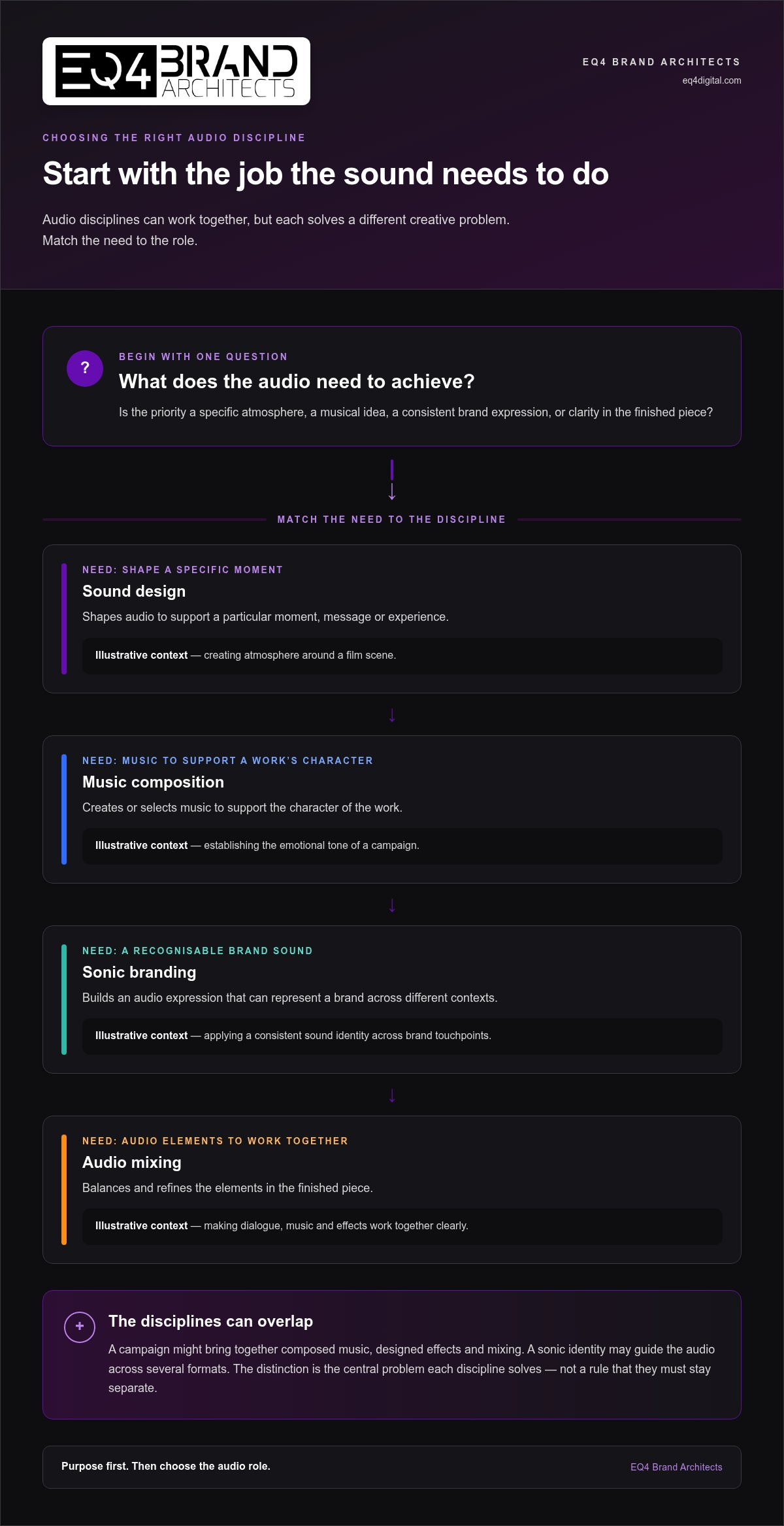
Sound design shapes audio elements for a particular experience or piece of communication. Music composition creates or selects music to support a work’s character. Sonic branding takes a broader view, shaping a recognisable audio expression that can represent a brand across different contexts. Audio mixing balances and refines the elements so they work together in the finished piece.
| Discipline | Purpose | Illustrative context |
|---|---|---|
| Sound design | Shape audio to support a specific moment, message or experience | Creating atmosphere around a film scene |
| Music composition | Create or select music that supports a work’s character | Establishing the emotional tone of a campaign |
| Sonic branding | Build a recognisable audio expression for a brand | Applying a consistent sound identity across brand touchpoints |
| Audio mixing | Balance audio elements in the finished piece | Making dialogue, music and effects work together clearly |
The boundaries can overlap. A campaign might use composed music, designed effects and mixing, while a sonic identity may inform the audio approach across several formats. The distinction is the central problem each discipline solves, not a rule that the disciplines must remain separate.
How audio works with picture, motion and space
Picture gives sound context; sound, in turn, can guide how a visual moment is read. A brief pause before a reveal may create anticipation, while a change in ambience can signal a shift in place or mood. In animation, sound can give movement a sense of weight or rhythm without explaining what is already clear on screen. Explore how this relationship develops in animation studio trends.
For film, consider sound alongside the story and visual structure, rather than treating it as a final layer. That alignment is one part of a considered video production strategy. Visual effects and audio can support the same moment in different ways: this visual effects agency guide explores the visual side without replacing the role of sound.
For brands shaping audio alongside broader creative direction, EQ4’s integrated creative approach brings sound design into the wider communication picture.
How to brief a sound design project with clarity
A useful brief gives a sound design agency a clear communication goal and enough context to make considered creative choices. You don’t need to arrive with a list of sounds. Start by explaining what the work needs to do, where people will encounter it and what the audience should take away.
A focused audio brief defines the objective, audience, context, desired feeling and practical requirements.
Start with the audience, message and intended response
Set out the essentials before describing a style. This separates what the project must achieve from where creative exploration can add value:
- Objective: State what the audio should help communicate or achieve, such as making a campaign message easier to follow.
- Audience: Describe who will hear it and what they already know about the subject or brand.
- Context: Explain where the sound will appear, such as within a film, digital experience or brand activation.
- Desired feeling: Use specific language such as reassuring, energetic or reflective, and explain what the audience should feel, understand or notice.
- Practical requirements: Share relevant timing, delivery context and known technical requirements, along with any essential constraints.
Specificity helps. “Make it exciting” leaves room for different interpretations; “build anticipation before the message, then leave space for the voice-over” gives clearer direction. Name the central message and intended response, not just the mood you want the audio to create.
Set the context and practical boundaries
Include the format and placement, plus any surrounding visuals, campaign material or spoken content that will shape how the sound is heard. A cue for a short film may need to work with dialogue and changes in pace, while audio for a digital experience needs to make sense within an interaction. Share timings and known delivery requirements where they affect the work.
Separate non-negotiables from open creative direction. The message, brand considerations and required placement might be fixed; the precise sound or treatment could remain open for exploration. If you include references, explain what they illustrate, such as their pace or atmosphere. Treat them as directional examples, not instructions to copy another brand.
With the objective, audience and boundaries clear, EQ4 can connect sound design to wider communication and creative direction. EQ4’s sound design service is part of a considered approach to brand communication.
How EQ4 connects sound design with intentional communication
Sound has more meaning when it belongs to the communication idea, rather than being treated as a separate layer added at the end. EQ4 Brand Architects offers sound design within a broader strategic communications practice, bringing audio into conversation with a brand’s message, audience and creative direction. This keeps the purpose in view: what should the sound contribute to the experience?
Bring strategic intent and creative craft into the same conversation
Communication strategy can help define the role sound should play. A brand seeking to feel considered may need a different audio character from a campaign designed to feel lively and immediate. The point isn’t to prescribe a particular sound, but to make creative choices in relation to what the brand wants to express and how its audience should receive that message.
Sound design can sit alongside relevant creative work, such as video production or animation, when the project calls for it. Not every project needs every discipline. Considering the choices together helps sound support the wider direction instead of competing with the visuals or message. EQ4’s strategic communication and creative services provide a broader context for that work.
Explore sound design as part of your next project
Bring sound into planning when a project relies on atmosphere, rhythm, a distinctive audience experience or a clear emotional tone. It may be a campaign, film, digital experience or brand activation. Starting the conversation early creates room to consider how audio relates to the message and other creative decisions, rather than treating it as a last-minute extra.
A useful starting point is a concise description of the audience, the project objective and the experience you want people to have. You don’t need every creative detail resolved. That context helps define the communication challenge and where audio may contribute.
For EQ4, purposeful sound design is part of intentional brand communication, shaped in relation to the wider creative direction. See how EQ4 approaches purposeful communication.
Make sound part of the next creative decision
The next time you shape a brand experience, consider sound while the central idea is still taking form. That gives audio a chance to contribute meaningfully, rather than simply fill a space once other creative decisions are settled. A sound design agency can help translate the communication intention into an audio direction that feels considered and relevant to its audience.
EQ4 Brand Architects brings sound design into a broader practice that connects strategic communication with creative services. Treating audio as part of the brand conversation lets each project define the role sound needs to play.
You don’t need every detail resolved to take a useful next step. Begin with the audience, the message and the experience you want to create. Contact EQ4 Brand Architects to discuss sound design for your next project.
Frequently Asked Questions
What does a sound design agency do?
A sound design agency helps organisations make deliberate audio choices for a particular communication need. Its contribution can help when a campaign, film or experience needs a clearer audio character, or when existing sound feels disconnected from the brand. The agency understands the creative challenge and shapes an appropriate direction. EQ4 Brand Architects offers sound design as part of its broader strategic communications practice.
How is sound design different from music production?
Music production focuses on making or refining a piece of music, which may involve arranging, recording or shaping its sound. Sound design can involve music, but it may also address non-musical audio, such as a transition or an environmental layer that supports a particular moment. For a short brand film, music production might develop the score, while sound design considers how other audio elements relate to the images and speech.
When should a business consider sound design for a campaign?
Consider it during campaign planning if audio could make the central idea clearer or give the audience a more coherent experience. A campaign built around a quiet, reflective message, for example, may need a different audio treatment from one intended to feel lively. Bringing sound into the discussion before production decisions are settled helps the team consider its role alongside the campaign’s visuals and message.
Can sound design be used in digital experiences as well as video?
Yes. In a digital experience, audio might signal that an action has been recognised or help mark a transition, provided it suits the context and doesn’t interrupt the user. Video has a fixed sequence of images and sound; interactive formats respond to what a person does. That difference matters: audio for an interface should be considered in relation to user actions, while sound for video follows the story’s timing.
What should I include in a sound design brief?
Include the project’s purpose, who it’s for, where the audio will be heard, the response you want from the audience and any fixed requirements. Test your brief by completing this sentence: “For [audience], this sound should help communicate [message] in [context], while feeling [tone].” Add references only if you can explain what you want them to illustrate, rather than treating them as a template.
Does sound design include sonic branding?
Not necessarily. Sound design can contribute to a brand’s audio expression, but sonic branding is the wider question of how a brand sounds across different contexts. A single film may need sound design without requiring a broader audio identity. If a business wants a consistent audio character across different kinds of communication, consider how individual sound choices relate to that larger identity.