





A brand style guide that teams can’t find, interpret or apply won’t create consistency. It may document colours and logos, yet still leave communications teams, suppliers and executives making different decisions across channels. If you’re considering how to create a brand style guide, start with the decisions people need to make, not the pages the document should contain.
Ground the guidance in the organisation’s positioning, purpose and audiences, then translate those foundations into practical direction for visual identity, language and communication. The aim isn’t to make every message look or sound identical. It’s to give people clear principles they can apply with confidence, while leaving room for context and judgement.
A useful guide does more than document an identity. It helps turn strategic intent into consistent, audience-aware communication. To get there, identify where teams need clarity, agree the foundations, test the guidance in real tasks, then establish who owns and updates it.
Key Takeaways
- Use recurring communication problems to decide what the guide needs to clarify, rather than starting with a template.
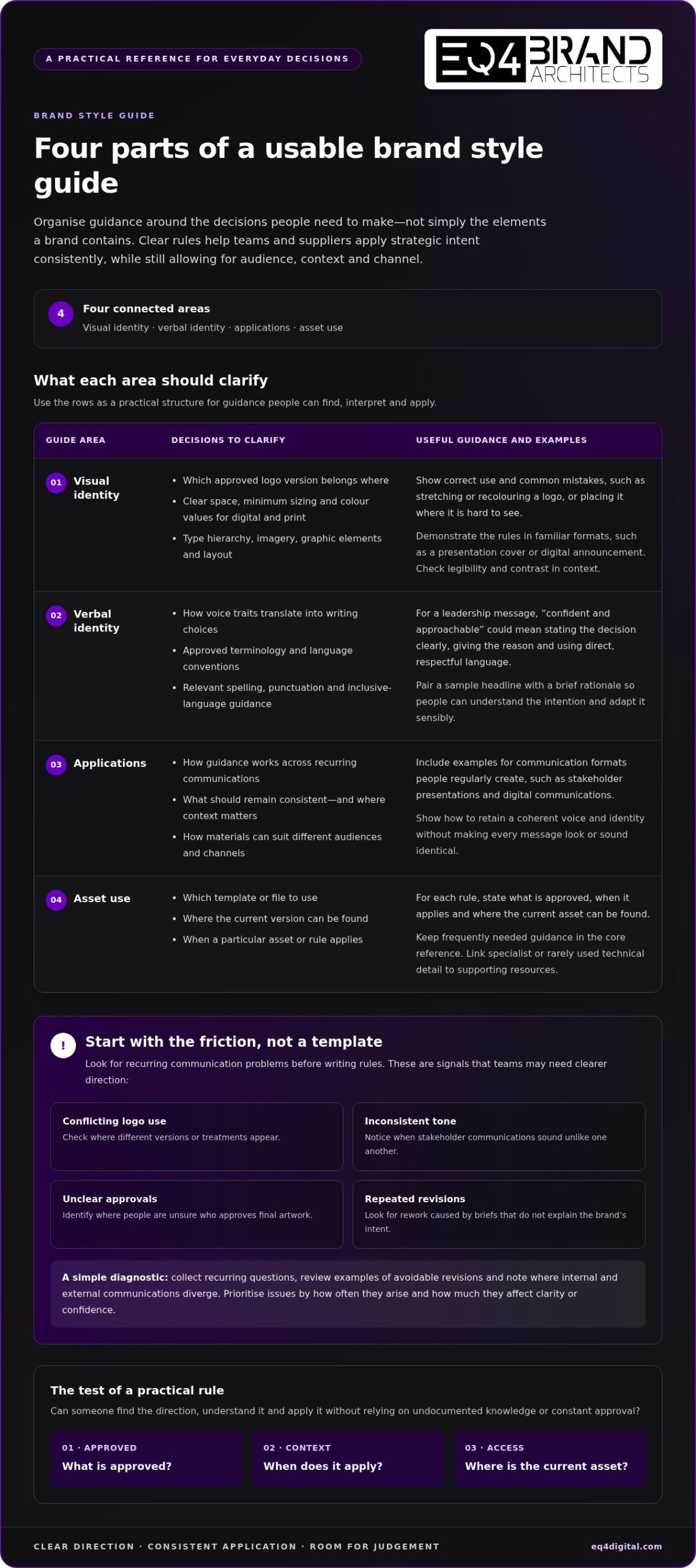
- Organise guidance around visual identity, verbal identity, real-world applications and practical asset use.
- To learn how to create a brand style guide, follow a clear process: audit current materials, align on direction, draft, test and approve.
- Prioritise rules teams need often, and link to supporting resources for less frequent or more detailed guidance.
- Choose a format that fits how people work, how easily they need to find guidance and how often it changes.
How to create a brand style guide that addresses real communication problems
Inconsistent brand decisions can make an organisation feel different from one channel to the next. A presentation may use an outdated logo, a stakeholder update may sound unlike the organisation, and a supplier may not know who approves the final artwork. These problems can weaken clarity and create avoidable work for the people communicating on the organisation’s behalf.
A brand style guide is a shared reference for applying visual and verbal identity in communications. It sets out practical direction, such as which logo files to use, what tone to adopt and how to adapt materials for different channels. It doesn’t replace brand strategy or identity development. Those establish the organisation’s positioning, purpose, narrative and identity direction; the guide helps people apply that intent consistently in day-to-day work.
The distinction matters. A document can set rules for using a visual identity, but it can’t resolve an unclear position or an unagreed promise. Settle the strategic decisions first, then translate them into guidance people can use. A useful guide supports judgement rather than trying to prescribe a response to every situation. It should make clear what must stay consistent and where teams can adapt for audience, context or channel.
What is a brand style guide, and who needs one?
Think of it as a working reference for anyone who creates, approves or commissions communication. That may include leadership, communications teams, designers and production partners. Its scope should reflect the organisation’s audiences, channels and recurring decisions. An organisation communicating with employees, communities, media and institutional stakeholders, for example, needs guidance that addresses different contexts without losing a coherent voice.
Which communication problems should the guide solve?
Identify the friction before drafting rules. Ask teams where they hesitate, disagree or repeat work. Look for conflicting logo use, inconsistent tone across stakeholder communications, uncertainty about approvals, or repeated revisions because a brief didn’t explain the brand’s intent. These patterns can make it harder for audiences to recognise the organisation’s voice and understand its messages.
Use a short diagnostic: collect recurring questions, review examples of avoidable revisions, and note where internal and external communications diverge. Prioritise issues by how often they arise and how much they affect clarity or confidence. This gives the guide a practical purpose: helping people make better-informed decisions, not adding another layer to the approval process.
What to include in a brand style guide: rules people can apply
Organise the guide around the decisions people need to make, not simply the elements a brand contains. For each rule, state what is approved, when it applies and where the current asset can be found. This helps an internal team preparing a stakeholder presentation and a designer producing campaign materials work from the same direction.
Build the guide around four connected areas: visual identity, verbal identity, applications and asset use. Prioritise the material people need regularly; put specialist or rarely used technical detail in linked supporting resources so the core guide stays easy to scan. Include examples of correct use and common mistakes, with a brief explanation of the difference. Examples make abstract instructions easier to interpret and apply.
Visual identity: logo, colour, typography and imagery
Show approved logo versions and explain where each belongs. Include clear space, minimum sizing and examples of misuse, such as stretching, recolouring or placing a logo where it is hard to see. Record relevant colour values for digital and print work. Demonstrate type hierarchy, imagery, graphic elements and layout in familiar formats, such as a presentation cover or digital announcement. Check legibility and contrast in context, and represent South Africa’s varied audiences with care rather than relying on narrow visual assumptions.
Verbal identity: voice, messaging and language
Translate voice traits into choices writers can make. Instead of saying only “confident and approachable”, explain what that means in a leadership message: state the decision clearly, give the reason and use direct, respectful language. Include approved terminology, South African or British spelling, punctuation preferences and guidance for inclusive language where relevant. A sample headline paired with a brief rationale helps teams understand the intention and adapt it sensibly.
Applications and asset-use guidance complete the picture. Include examples for recurring communications, explain which templates or files to use, and show where current versions live. Strategic brand and communications guidance can connect design choices to positioning and audience needs, rather than treating visual rules as isolated instructions.
How to create a brand style guide: audit, agree, document and test
A brand style guide is an operational reference for applying brand rules across communications. Build it from evidence about how the organisation communicates, then test whether people can use it without relying on undocumented knowledge or constant approval.
Audit existing materials and agree the foundations
Gather current identity assets, templates, campaign materials and existing brand documents. Include examples from the channels teams actually use, from stakeholder presentations to digital communications. Ask contributors which decisions they find unclear, which questions keep returning and what is frequently sent for approval. Before drafting execution rules, confirm the positioning, audience promise and narrative they must express. If these foundations are still disputed, resolve that first.
Draft, test and refine the guidance
Write concise instructions and pair them with examples that show each rule in context. Then involve people who weren’t part of developing the guide. Give them realistic tasks, such as selecting the right logo for a presentation or drafting a short audience-facing message. Watch where they hesitate. Their questions reveal gaps more reliably than a review by the authors alone. Revise unclear wording, identify approved assets and make current versions easy to recognise.
Use this sequence to move from discovery to approval:
- Audit: Catalogue the materials in use and note recurring questions, conflicting decisions and the channels they affect.
- Align: Agree the strategic foundations with the people accountable for the organisation’s direction and communications.
- Draft: Turn those foundations into practical rules, examples and directions to the relevant assets.
- Test: Ask representative users to complete common tasks using only the draft. Record what they misunderstand or can’t find.
- Approve: Resolve remaining decisions, name the guidance owner and establish how updates will be authorised and communicated.
Keep the distinction clear throughout: agreement on what the organisation stands for comes before decisions about how that position appears in a particular communication. This helps prevent preferences about a layout or phrase from being mistaken for strategic direction.
If your team is developing guidance alongside wider positioning or identity decisions, discuss your brand challenge with EQ4 Brand Architects. Strategic advice and creative execution can work together, so the rules reflect the organisation’s intent and can be applied in practice.
Make your brand style guide easy to use, govern and update
A guide only helps if people can find the right instruction when they need it. Choose its format based on how teams work, what access they require and how often the guidance changes. A concise PDF is portable and easy to share, but revisions can leave old copies circulating. A searchable online guide is easier to update and can serve distributed teams, provided staff and partners can access it. A modular shared workspace can organise detail by audience or channel, but needs clear structure and active maintenance.
Choose a format that fits how teams work
For many organisations, a focused core guide with links to detailed resources is more practical than one long document. Keep frequently used direction easy to scan, and put specialist templates, asset libraries or technical specifications in clearly labelled supporting locations. Make the approved source obvious: identify the current version, remove or archive superseded files, and ensure external contributors can reach the materials relevant to their work.
Keep the guidance accurate and useful
Assign an owner responsible for accuracy, approval of changes, access to approved assets and communication of significant revisions. The owner needn’t make every creative decision, but should know who has authority to resolve questions and how updates are recorded. Review the guide when positioning, identity, audiences or channels change, and when recurring questions suggest a rule is unclear or difficult to apply.
Assess whether the guide is working through practical signals, not simply whether it has been published. Track repeated clarification requests, avoidable approval rounds and contributor feedback. If teams still rely on informal explanations, find out what they couldn’t locate or interpret, then improve that part of the guidance. This turns how to create a brand style guide into an ongoing governance practice, rather than a one-off documentation task.
When should leaders seek strategic and creative support?
Strategic and creative support can help when positioning remains unresolved, identity rules conflict, or communications must work across complex audiences and channels. Strategy clarifies what the organisation needs to express; creative direction translates that intent into practical choices across design and communication. EQ4’s brand strategy and identity guidance connects those decisions.
Put your brand guidance to work
A style guide earns its place when it shapes everyday decisions, not just the launch of a new identity. Make it part of how teams brief work, welcome new colleagues and review communications. When a question keeps resurfacing, treat it as useful feedback: clarify the guidance, improve access to the right resource or revisit the underlying decision.
That ongoing discipline is where how to create a brand style guide becomes a wider leadership question. Are your organisation’s positioning, audience promise and identity clear enough for people to communicate with confidence? If not, a document alone won’t resolve the uncertainty. Strategic alignment and practical creative direction can connect the organisation’s intent to the communications people produce, from design and digital experiences to stakeholder messages.
EQ4 brings together brand strategy and architecture, communication strategy and creative direction, with graphic design and web design as part of practical execution. Discuss your brand or communications challenge with EQ4 to identify a useful next step for your organisation.
Frequently Asked Questions
What should a brand style guide include?
Include the rules and examples people need to apply the brand consistently: logo use, colour, typography, imagery, voice, messaging, templates and access to current assets. Also explain how the main brand sits alongside a subsidiary, programme, sponsor or delivery partner, and which identity takes precedence in each context. Clear co-branding examples can prevent last-minute debate over prominence and endorsement.
How do you create a brand style guide from scratch?
Start by defining which parts of the organisation the guide will cover. Map the master brand, any sub-brands or programmes, and the relationships that need to appear in communications. Agree who has authority to make decisions when identities overlap. Then audit existing materials, confirm the strategic foundations, draft practical rules and test them with people who will use the guide.
Is a brand style guide the same as brand guidelines?
The labels don’t have a single universal meaning, so make the intended scope explicit. This is especially useful when a brief, procurement document or internal approval refers to “brand guidelines” without defining what the work must address. State whether the resource covers one organisation, several brands or a specific programme, and name the decisions it is intended to support.
How long should a brand style guide be?
Let the number of distinct decisions determine its depth, not a target page count. A single identity used in a few formats may need little explanation; a group with several sub-brands, partner relationships and audience-specific exceptions may need more. If two situations require different answers, explain the distinction. If they don’t, avoid repeating the same rule.
What is the difference between a brand style guide and a brand book?
There’s no consistent naming convention across organisations, so the title alone may not tell users what the resource contains. Focus on what each reader needs. A new employee may need context about the organisation’s story, while a production partner may need precise direction for a particular deliverable. Label sections around those tasks so each audience can find relevant information, whether it sits in one resource or several.
How often should a brand style guide be updated?
There’s no universal review interval. Record changes as they’re made, including the affected section, the reason and the approval, so users can see what has changed. For a significant revision, send a concise update to the people who rely on the guide and replace outdated working copies where possible. This reduces the risk of teams following different versions without realising it.