





What if the most polished website isn’t the most effective one? Good web design does more than make a business look established. It connects your brand with the people you want to reach, guides them towards useful next steps and supports clear business objectives. When those elements work together, the result feels purposeful as well as visually considered.
It’s understandable to focus first on appearance, especially when you’re weighing a ready-made template against a more tailored approach. But a striking homepage can still leave visitors unsure where to go, what you offer or how to take the next step. The better question is whether your design choices make the site useful for both your audience and your business.
This practical checklist will help you define what your corporate website needs and assess whether each decision has a clear purpose. You’ll consider audience needs, brand expression, content, navigation and user journeys, alongside the trade-offs between template-based and tailored design. Use it to plan a site that brings visual identity and digital communication into alignment, and to decide where a creative partner could help connect your brand, campaigns and online experience.
Key Takeaways
- Start with the people your website needs to serve and the tasks they should be able to complete.
- Organise priority content into a clear hierarchy before making decisions about page styling.
- Choose a web design route by weighing your project’s complexity, desired control and capacity to manage changing content.
- Use a focused review checklist to see whether a design proposal connects audience needs, content structure and visual direction.
- Bring brand communication and creative direction into the planning process to shape a more coherent digital expression.
What should corporate web design achieve?
A corporate website needs to do more than look considered. It should communicate what an organisation stands for, help visitors find relevant information and make the next step clear. Visual polish can create a strong first impression, but without useful content and a purposeful structure, visitors may struggle to understand what the business offers or where to go.
Web design shapes a website’s structure, appearance and overall experience around the people it is intended to serve. It brings together page layouts, navigation, content presentation, colour, typography and interaction. The aim isn’t to add visual elements for their own sake, but to reflect the brand and make important information easier to use. For an overview of the discipline’s wider scope, explore principles and practices across web design.
Purposeful web design connects audience needs with business objectives through a clear, coherent and usable digital experience. Use that as a practical test: each significant choice should help visitors understand, decide or act, while supporting what the organisation needs its website to do.
How does web design differ from web development?
Design plans the website’s visual and experiential system: how information is arranged, how people move between pages and how brand qualities are expressed. Development implements the structure and functions that make the site work, translating those plans into a working digital experience. The disciplines are distinct, but they need to inform each other. A layout must account for how it will function, while the built experience should preserve the clarity and intent of the design.
Close alignment helps prevent a polished concept from becoming confusing or difficult to use. For instance, a prominent menu is only useful if its labels make sense to visitors and its links lead to the information they expect. Design and development work best when appearance, content and function are considered together.
Which outcomes should a corporate website support?
Start with useful outcomes, not promises of guaranteed results. A website might need to explain an organisation’s services, introduce its expertise, answer common questions or help prospective clients make an informed enquiry. Clear navigation and purposeful content make it easier to find those answers. Consistent choices in colour, typography and imagery can also make the brand feel more coherent across pages.
Use these questions to make objectives concrete:
- What should visitors understand? Identify the essential message each priority page needs to communicate.
- What decision should the content help them make? Give people enough context to assess relevance and explore an appropriate next step.
- What should the organisation be able to learn? Decide which meaningful signals, such as enquiries or engagement with key information, will help assess whether the site is serving its purpose.
These aims give design choices a clear point of reference. They don’t guarantee a particular business result, but they help the organisation plan and evaluate its website with intention.
Use this web design checklist to plan the site architecture
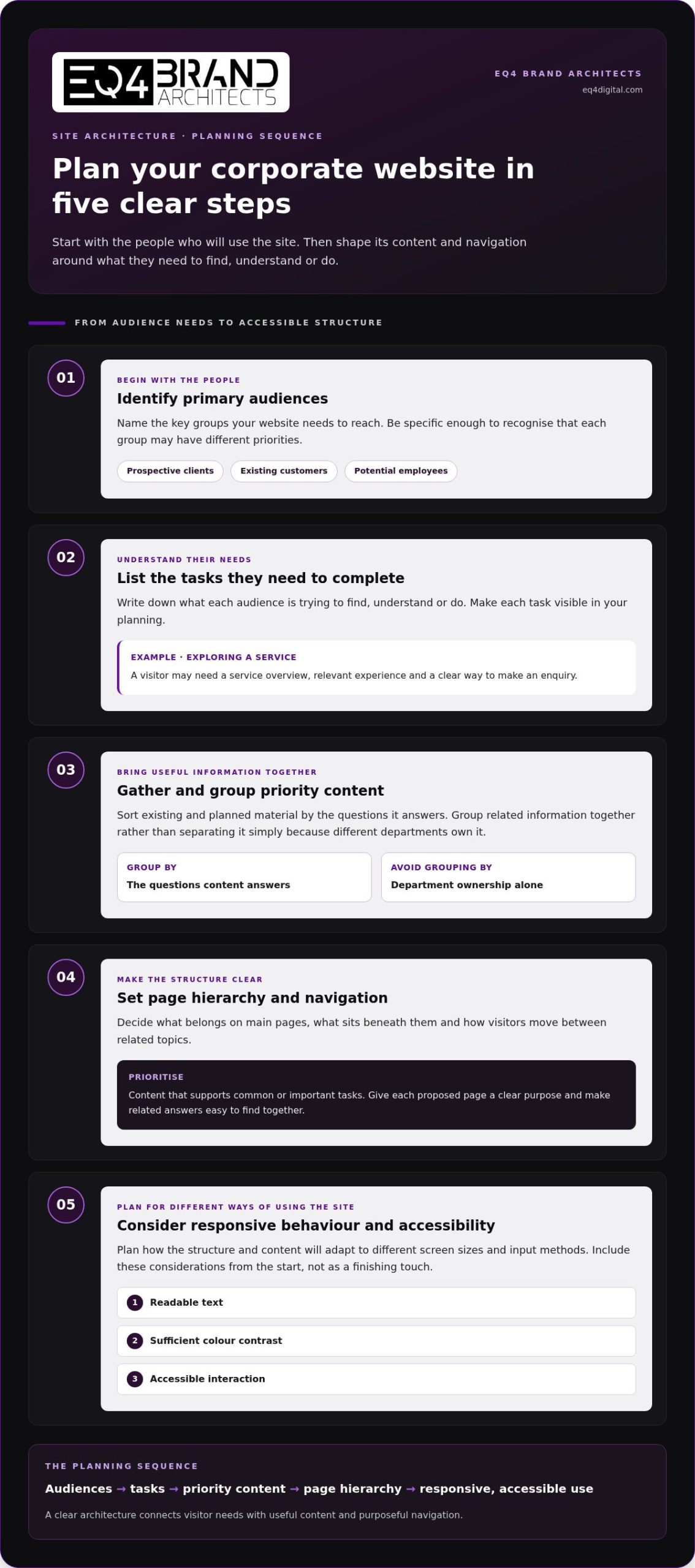
Plan the structure before choosing page styles. A clear architecture starts with the people the site needs to serve, then organises content around their questions and tasks. This helps teams avoid building navigation around internal departments when visitors need a direct route to useful information.
- Identify primary audiences. Name the key groups the website needs to reach, such as prospective clients, existing customers or potential employees. Be specific enough to recognise that each group may have different priorities.
- List the tasks they need to complete. Write down what each audience is trying to find, understand or do. For example, someone exploring a service may need an overview, relevant experience and a clear way to make an enquiry.
- Gather and group priority content. Sort existing and planned material by the questions it answers. Group related information together rather than separating it simply because different departments own it.
- Set page hierarchy and navigation. Decide which information belongs on main pages, what sits beneath them and how visitors move between related topics. Prioritise content that supports common or important tasks.
- Plan for different ways of using the site. Consider how the structure and content will adapt to different screen sizes and input methods. Include readability, contrast and accessible interaction in the plan, not as a finishing touch.
Map audiences, tasks and priority content
Start with audience needs, not an organisation chart. If visitors need to compare services, understand an approach or find contact details, make those needs visible in the content plan. Give each proposed page a clear purpose and group related answers together. This creates a simpler hierarchy, reduces competing navigation choices and helps visitors decide where to go next.
Plan navigation, responsive behaviour and accessibility
Use plain, recognisable navigation labels and a consistent structure so visitors can understand their options quickly. Consider how menus, text and page layouts behave on smaller screens, and whether essential actions work with different input methods. Check that text is readable, colour contrast supports legibility and interactive elements are easy to identify and use. Smashing Magazine’s design and development articles offer further perspectives as you refine these decisions.
Checklist summary: Site architecture should reflect audience priorities, organising content and navigation around what visitors need to understand and do.
With that foundation in place, creative direction can make the experience coherent as well as practical. Bringing brand and digital communication together can connect audience needs with intentional strategy. EQ4’s approach to web design brings those considerations into the same conversation.
Compare web design routes: website builder, tailored design or hybrid
The right route depends on what the website needs to do, how distinctive its content and audience journeys are, and who will manage it after launch. A website builder can offer a practical starting point; tailored design allows more deliberate choices around structure and brand expression; a hybrid combines a flexible platform with considered creative direction. Convenience matters, but so does the fit with your organisation’s needs over time.
Website builder
A builder may suit a straightforward site with familiar page types, a defined set of content and an internal team able to manage routine edits. Templates and built-in editing tools can make day-to-day ownership more accessible. The trade-off is that design choices may need to follow the template’s patterns, limiting how distinctly the site expresses a brand or handles unusual content.
Tailored design
Tailored design may be appropriate when the site needs a distinctive structure, several audience journeys or close alignment with an established brand system. More deliberate planning can shape how content and visual direction work together. This approach also calls for clear decisions about how the site will be maintained and who will take responsibility for changes.
Hybrid approach
A hybrid can balance a flexible platform with tailored design decisions. A team might use standard page patterns for routine information, while giving priority content a more distinctive presentation. This can support internal updates without making every page identical, provided the design system and content rules are clear.
When can a website builder be a suitable route?
A builder may work well when the site has a modest set of familiar pages, such as an introduction, service information and contact details. It can also suit teams with the time and confidence to handle routine content changes themselves. Before choosing this route, consider whether the available templates can accommodate your brand as content grows, rather than only looking convincing on the initial pages.
When might tailored web design be more appropriate?
Consider tailored design if visitors need to follow more involved journeys or if the content doesn’t fit predictable page patterns. It may also help organisations express a well-developed brand system across varied types of information. A hybrid can be a practical middle ground: use a flexible platform for content management, while applying creative direction to the pages and experiences that matter most.
To compare the options, assess each against the same requirements:
- Project complexity: Are page types and visitor journeys straightforward, or do they need a more distinctive structure?
- Control: How much freedom does the team need over visual presentation and content organisation?
- Internal capability: Who will make routine updates, and how much guidance will they need to keep the site coherent?
- Expected change: Will content remain relatively stable, or is the site likely to develop as the organisation’s communication needs evolve?
There isn’t one universally best route. Choose the approach that balances practical ownership with the level of control and creative intent your website requires.
Evaluate a web design proposal with this practical checklist
A proposal should explain more than how a finished site might look. It should show how the organisation’s priorities will shape the experience, from the way content is arranged to the visual choices that express the brand. Use this checklist to assess whether the proposed approach has a clear rationale and accounts for how the website will be used and managed.
Check the strategy, scope and creative direction
Look for a clear picture of who the site is for and what those audiences should be able to find or do. The scope should connect those needs to decisions about content, page structure and visual direction, rather than treating each as a separate task. Consider whether the creative approach fits the organisation’s wider communications and brand identity, while making the website’s own purpose clear.
Review usability, accessibility and future ownership
Assess whether the proposal considers how visitors will read, navigate and interact with the site. Content should be easy to scan, navigation labels understandable, and layouts usable across screen sizes and input methods. Accessibility is part of the experience, not a final polish. The plan should also make content ownership clear, so your team understands how updates will be handled after launch.
Use these points to guide a focused review:
- Audience and purpose: Does the proposal identify its intended audiences and the key tasks the website should support?
- Content structure: Is there a clear logic for grouping information, prioritising key pages and helping visitors move between related topics?
- Visual direction: Do the proposed layouts, typography, colour and imagery express the brand coherently and support the content?
- Usability: Can visitors understand where to go next, and is important information readable and straightforward to find?
- Responsive behaviour and accessibility: Does the approach consider different screen sizes, readable text, meaningful contrast and usable interactions?
- Scope and ownership: Are the design and content decisions included in the work clear, and is responsibility for future content updates considered?
A proposal doesn’t need to answer every detail at once, but it should make the thinking behind its direction understandable. If a design choice seems mainly decorative, consider how it serves the audience, content or brand before treating it as essential. This keeps the review grounded in purpose, rather than personal preference alone.
For a broader perspective on connecting creative direction with communication, EQ4’s design approach places website decisions in the context of brand communication.
Bring web design and brand communication together with EQ4
A corporate website is one expression of a brand, not a separate visual exercise. Its language, structure and creative direction influence how people encounter the organisation online, while its relationship to wider communications helps the brand feel consistent across different touchpoints. EQ4 Brand Architects brings web design together with communication strategy, graphic design and production capabilities, using an approach grounded in intentional strategy and emotional intelligence.
Connect digital design with the wider brand
Before shaping a digital experience, establish what the brand needs to communicate and how its existing direction should carry through to the website. This can include the tone of its messages, how it presents its work and the visual choices that make its identity recognisable. Consistent creative direction gives each touchpoint a shared foundation without requiring every channel to look or sound identical.
This connection matters when a website supports broader campaigns or sits alongside other forms of brand communication. If a campaign introduces an idea or invites people to engage, the website can continue that conversation with relevant content and a coherent visual expression. The aim is to make the relationship feel considered, rather than leaving visitors to piece together disconnected messages. EQ4’s wider brand design and production perspective brings digital choices into a broader creative context.
That context also supports practical decisions. The website’s visual direction can reflect established brand elements, while its content structure gives priority to the information audiences need. Strategy connects those decisions to communication objectives; creative direction brings them together with clarity and feeling.
Start a considered web design conversation
A useful starting point is a clear picture of the project: who the website needs to reach, what it should help them do and what feels unresolved in the current experience. These details help clarify the right direction, whether the priority is clearer communication, a more coherent expression of the brand or a website that better supports audience engagement.
As part of a broader communications, design and production offer, EQ4 brings digital design into conversation with brand development and campaign strategy. The approach is shaped around the project, rather than assuming every organisation needs the same kind of website. A considered discussion can clarify which priorities should guide the work and how the digital expression can support them, without promising a particular business result.
To explore how your website could connect more closely with your brand and objectives, explore web design with EQ4.
Make your next website decision with purpose
Your next step doesn’t need to be a complete redesign. Start by identifying one point where your website could communicate more clearly, then consider how that change might support your wider brand direction. A focused priority gives you a practical foundation for shaping the work.
EQ4 brings web design together with communication strategy, graphic design and production, guided by an approach that combines emotional intelligence with intentional strategies. This wider perspective can keep digital expression connected to the way your organisation communicates elsewhere, while shaping an approach around your project’s needs.
For a purposeful digital experience connected to your brand and objectives, explore web design with EQ4.
Frequently Asked Questions
What is web design?
Web design is the work of shaping how a website presents information and feels to use. It includes decisions about layout, typography, colour, imagery and interactive elements, as well as how those choices support the organisation’s identity. For example, clear headings and a focused layout on a service page can help a prospective client understand an offering without searching through unrelated information.
Does web design affect SEO?
Yes, web design can support SEO by making a site easier for people to use and search engines to interpret, though design alone can’t guarantee rankings. Clear page structures, descriptive headings and links between related content make information easier to understand. Readable text and a site that works well on mobile devices also support the visitor experience. Search visibility still depends on factors beyond visual design.
Can a website builder work for a corporate website?
Yes, a website builder can work for a corporate site if its content and functionality needs are straightforward. A business with a concise overview, a few service pages and a contact page may find a template-based setup practical, particularly if its team can maintain routine updates. If the organisation needs distinctive page structures or closely controlled brand expression, weigh those requirements against the flexibility of the chosen approach.
How much does web design cost?
Web design costs depend on the project’s scope, so a useful estimate needs to reflect what the work involves. Factors include the number of page types, the level of creative direction, content requirements and any agreed responsibilities after launch. To compare proposals fairly, check that they cover the same deliverables and assumptions. Request estimates in South African Rand and make sure the scope is clear before comparing totals.
Is responsive web design important?
Yes, responsive design matters because visitors may use phones, tablets or desktop screens, and the experience should remain clear across them. Check practical details, not just whether a page shrinks to fit: does text remain readable without zooming, can people reach navigation and buttons comfortably, and does important content stay easy to find? Testing key pages at different screen widths can reveal issues before they frustrate visitors.
How often should a business redesign its website?
There’s no fixed redesign schedule that suits every business. Review the site when your brand direction, services or audience needs change, or when important information becomes difficult to find. Visitor feedback and site analytics can also help identify friction, such as people leaving a key page without finding the next step. Sometimes targeted updates will address the issue; a broader redesign may make sense when the site’s foundations no longer fit.