





A data breach can change customers’ view of an organisation, making confidence feel less certain and the relationship more conditional. Rebuilding customer trust after a data breach calls for more than a polished statement. It requires communication that respects customers’ concerns and organisational action that gives those words substance. The response becomes part of how people judge the organisation’s priorities and accountability.
For senior leaders, this creates a difficult balance: respond to immediate pressure while keeping sight of reputation, stakeholder relationships and longer-term responsibilities. Customers need clear, useful communication; leadership needs a coordinated response that reflects what the organisation is actually doing. When those priorities diverge, rebuilding trust becomes harder.
This article explains how customer perceptions can shift after a breach and how organisations can respond with care and discipline. It covers practical assistance, transparent communication and digital trust, then outlines what a useful notification should say. The aim is to connect customers’ experience of a breach with the wider work of protecting confidence in the organisation.
Key Takeaways
- Explain what happened, what customers may be affected and what the organisation is doing, using clear language and regular updates.
- Give affected people practical next steps and make support easy to access as questions arise.
- Coordinate responsibilities and communication plans before a breach so teams can respond consistently under pressure.
- Show how the organisation is addressing weaknesses and improving its approach, rather than relying on reassurance alone.
- Measure whether customers understand the updates, can access help and are taking the actions needed to protect themselves.
How can a customer’s perceptions of the company change after a data breach?
A breach can make customers question whether an organisation deserves their confidence, even when they have valued its products or services. The effect depends partly on what happened and how the organisation responds. Treat rebuilding customer trust after a data breach as sustained organisational work, not a communications moment with a fixed end point.
-
Plan crisis communications and recovery
Set a crisis plan that connects leadership decisions, operational recovery and customer impact. Assign responsibility for approving public statements, tracking stakeholder concerns and reviewing recovery milestones. Include scenarios where facts emerge over time, so teams can adapt without improvising their roles. Keep communications integrated with incident response: customers judge whether the organisation’s actions match its stated priorities.
-
Communicate transparently about the breach
Use a direct, accountable tone that recognises the disruption and avoids defensiveness. An apology can acknowledge harm, but it cannot replace action or suggest the issue is resolved. Explain how the organisation is assessing customer impact and sharing progress. Findings from UK consumer surveys may offer context, but South African organisations should assess their own stakeholders’ concerns rather than assume the same response.
-
Tailor communications to customers
Consider how different groups may interpret the incident, including customers who rely on digital services for essential transactions. Map concerns by relationship and potential impact, then use feedback to identify where confidence is weakening. Measure more than message exposure: assess whether customers understand the organisation’s position, feel able to raise concerns and continue using relevant services. These signals help leaders distinguish short-term attention from changes in stakeholder confidence.
-
Demonstrate system and data security
Support claims about security with evidence of completed improvements and accountable oversight. According to the UK consumer survey described in the research, 57% said proof of improved security would do the most to restore trust after a cyberattack. Trust has no set recovery timetable; survey findings suggest rebuilding it can take years. Target is an example of customer relationships helping mitigate reputational damage, not proof that every customer’s confidence returned.
Notifying affected customers clearly and promptly
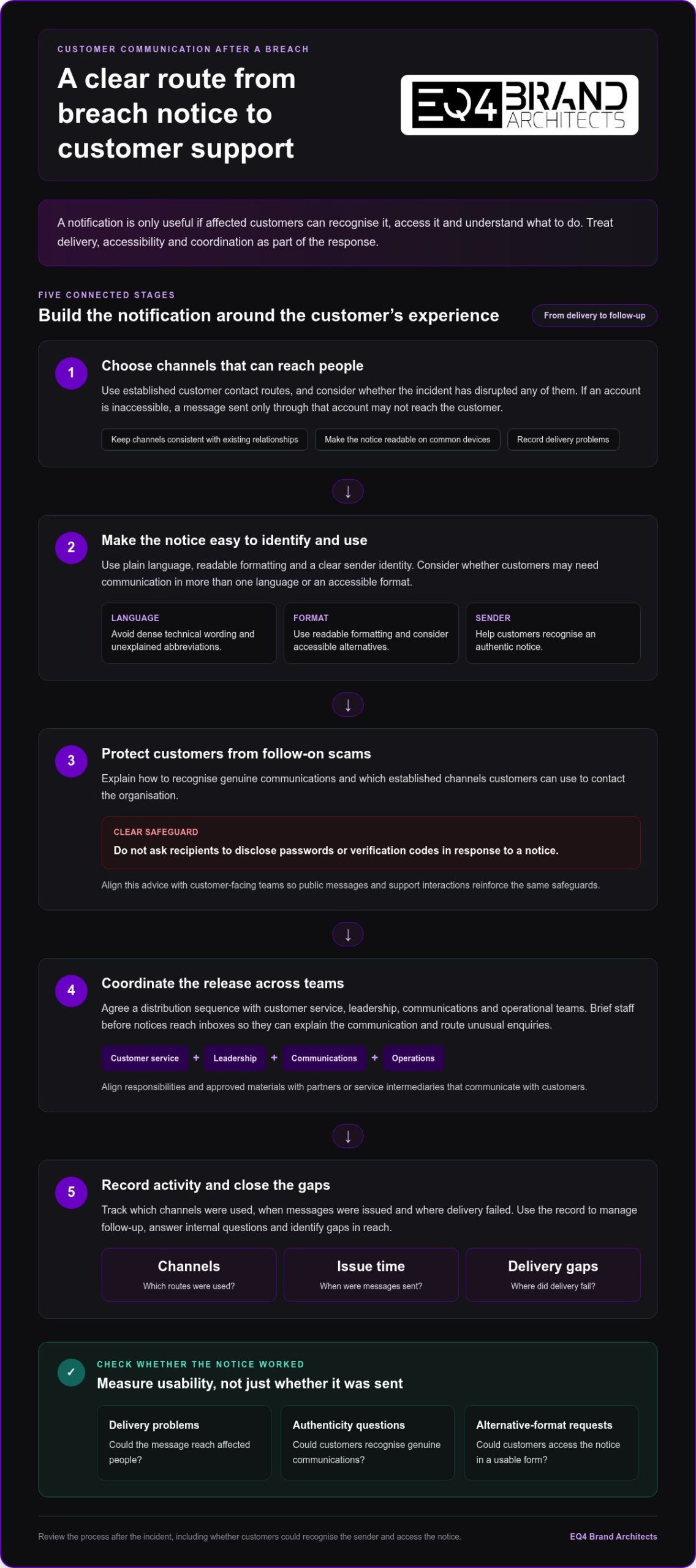
Notification is also a delivery challenge. A carefully prepared message is of little use if affected people cannot recognise or access it. Treat distribution, accessibility and coordination as part of the response, not as final administrative tasks.
- Choose channels that can reach people reliably. Use established customer contact routes and consider whether the incident has disrupted any of them. If a digital account is inaccessible, a message delivered only through that account may not reach the customer. Keep channel choices consistent with existing relationships, and make the notice readable on common devices. Record delivery problems so teams can address them.
- Make the notice accessible and easy to identify. Use plain language, readable formatting and a clear sender identity. In South Africa, consider whether the audience may need communication in more than one language or an accessible format. Avoid dense technical wording and unexplained abbreviations. Customers should be able to recognise an authentic notice without needing specialist knowledge.
- Protect customers from follow-on scams. A breach announcement can create an opportunity for fraudsters to impersonate the organisation. Explain how to recognise genuine communications and which established channels customers can use to contact the organisation. Do not ask recipients to disclose passwords or verification codes in response to a notice. Coordinate this advice with customer-facing teams so public messages and support interactions reinforce the same safeguards.
- Coordinate the release across organisational teams. Agree a distribution sequence with customer service, leadership, communications and operational teams. Brief staff before notices reach inboxes, so they can explain the communication and route unusual enquiries appropriately. If partners or service intermediaries communicate with customers, align responsibilities and approved materials in advance. This reduces the risk of contradictory announcements or customers hearing about the incident from an unprepared contact.
- Keep a record of notification activity. Track which channels were used, when messages were issued and where delivery failed. This record helps teams manage follow-up work, answer internal questions and identify gaps in reach. Review the process after the incident, including whether customers could recognise the sender and access the notice. A practical communication planning approach can help teams coordinate these responsibilities.
Assess effectiveness by tracking delivery problems, customer questions about authenticity and requests for alternative formats. These indicators show whether the notification reached people in a usable form, not just whether it was sent.
Customer support and practical assistance after a breach
After an incident, customers need more than an apology: they need relevant help and clear ways to act. Build support into the response so people can address concerns about exposure while cybersecurity teams work to restore services.
- Set up a dedicated support route. Give affected customers a clear channel for questions, separate from general enquiries where possible. Prepare staff with approved information about the incident, known customer impacts and actions underway. Include a route for escalating account access problems or suspected misuse. A defined support process helps prevent customers from repeating sensitive details across disconnected teams.
- Match protective guidance to the information involved. Explain practical steps that reflect the confirmed exposure. If credentials may be affected, tell customers how to change them and secure related accounts. Where personal or financial information is involved, consider relevant services such as credit monitoring or identity theft protection. Dark web monitoring may also be appropriate in some cases. Explain the purpose and limits of any support offered.
- Equip frontline teams to respond consistently. Provide call handlers and customer-facing staff with a concise script, a question-and-answer record and escalation instructions. For example, staff should know how to route a report of suspicious account activity without speculating about its cause. Review repeated questions and unresolved cases to identify unclear guidance or support capacity that needs adjustment.
- Make each protective action easy to follow. Give customers a short sequence of steps, with clear labels and accessible language. A password-reset instruction should identify the affected account, explain how to reach the genuine reset process and warn against sharing passwords or verification codes with callers. Avoid sending people to unfamiliar channels without explaining how to recognise an authentic message from the organisation.
- Keep support aligned with the recovery effort. Share relevant progress with customer-facing teams as the investigation and remediation develop. If the advice changes, update scripts and customer materials together. Once the immediate incident is stabilised, use recurring enquiries and feedback to identify gaps in the response. This connects customer care with cybersecurity improvements and gives leaders practical evidence of what people still need.
Track whether customers can access support, understand the guidance and complete recommended protective actions. These indicators reveal more than enquiry volume alone: they help assess whether support is useful and can contribute to restoring confidence.
Digital trust as a competitive differentiator
After a breach, customers judge digital trust through everyday experiences, not statements alone. Organisations can make privacy choices clearer, strengthen account controls and show how security commitments shape customer interactions.
- Give customers meaningful control over their information. Review account settings and make privacy choices easy to find. For example, explain what an opt-in authorises and how a customer can opt out later. Pair clear choices with multi-factor authentication where available. These steps give customers practical agency and show that information handling is part of the relationship, not merely a technical process.
- Make security visible in customer journeys. Examine account creation, sign-in and information updates for points where people need clearer protection. Explain why a security step appears and what customers should do if something seems unusual. Avoid unexplained friction: a control customers cannot understand may reduce confidence rather than build it. Connect each customer-facing explanation to a real security practice.
- Turn public commitments into evidence. Describe specific improvements made after the incident, such as stronger monitoring or access controls, once those measures are verified. Report progress consistently without exposing technical details that could assist threats. Customers need to see a connection between the organisation’s commitments and its actions. Broad claims about being secure carry less weight than clear, substantiated changes.
- Use customer feedback to identify trust barriers. Review recurring questions, complaints, abandoned account processes and requests to change communication preferences. Separate practical obstacles from wider concerns about how information is used. For example, if customers repeatedly ask why a verification step is required, clarify its purpose in the sign-in journey. Use feedback to improve the experience, not only to measure reputation.
- Measure confidence through behaviour and understanding. Track whether customers can find privacy settings, complete protective actions and explain key choices in feedback. Compare those indicators over time with support themes and account activity. Don’t treat page views or positive reactions alone as proof of trust. A useful assessment combines customer understanding, meaningful engagement and evidence that security changes are working as intended.
When these practices become part of ordinary service, digital trust can distinguish an organisation through consistent care. The aim is not to erase damage with a message, but to make each customer interaction support a more confident relationship.
What should a customer data breach notification include?
Build the notification around six practical questions: who is affected, what happened, what information was involved, what customers should do, what the organisation is doing and when updates will follow. Keep each answer distinct so readers can quickly find the details they need.
- Identify the affected person and incident. Address the recipient directly where possible, and explain why they are receiving the notice. State when the organisation identified the incident if that timing is established. Avoid suggesting every customer was affected when evidence points to a specific group. A precise opening helps people assess whether the message applies to them.
- Describe what happened in plain language. Explain the type of incident and how it involved the organisation’s systems or information. For example, distinguish unauthorised account access from a service interruption. Use a short explanation rather than technical terms customers may not recognise. If an investigation is continuing, separate confirmed findings from questions still being examined.
- Explain the information and possible impact. Name the categories of information involved, such as contact details, account credentials or payment information, only when established. Then explain what the exposure could mean for the recipient. Don’t imply financial or identity risks without a factual basis. Clear distinctions help customers understand their situation without overstating or minimising potential harm.
- Give relevant protective steps. Set out actions in order, using specific instructions. If credentials may have been exposed, explain how to change the affected password and secure related accounts. If a protective service or remediation tool is available, say what it does and how customers can access it. Don’t recommend steps that do not match the information involved.
- Explain the response and prevention work. Summarise how the organisation contained the incident, is investigating its cause and plans to reduce the chance of a similar event. Keep technical details at a level customers can understand. Describe completed actions as completed, and distinguish them from work still underway. This makes the response credible without disclosing sensitive security information.
- Set out a reliable route for help and updates. Include a recognised contact channel, the questions the team can address and when the next update is expected. If the breach disrupts a service, give a recovery timeline the organisation can meet. If timing changes, explain why and provide a revised update. Consistent messages across notices, support teams and public statements reduce confusion.
Before sending, compare the notice with investigation findings, customer support guidance and planned updates. Check that every instruction has an owner, each contact route works and the promised timeline reflects operational progress. These checks help turn a breach notification into a useful, coherent account of the organisation’s response.
EQ4 Brand Architects: Reputation Management
EQ4 Brand Architects helps organisations bring reputation considerations into the response, connecting customer communication with wider stakeholder confidence. Its Reputation Management, Public Relations (PR) and Communication Strategy capabilities can support leaders working to align public messaging, internal responsibilities and the organisation’s developing response. Brand Activations may help communicate change through purposeful audience engagement when they fit the situation.
Strategic communication support is useful when breach communications feel fragmented, stakeholder concerns are growing or leaders need a clear approach to reporting progress. The work should reflect verified facts, operational actions and affected audiences’ needs, rather than relying on reassurance alone. The aim is a consistent, intentional response that connects communication choices to reputation and organisational priorities.
To discuss a reputation or communication challenge, contact EQ4 Brand Architects or visit eq4digital.com.
Make the response part of what changes next
Rebuilding customer trust after a data breach is not only a communications task; it is an organisational test. Treat the incident as an opportunity to learn, then connect those lessons to governance, leadership decisions and clear accountability. Future customer communications should reflect how the organisation actually operates, not simply what it intends to say.
For South African organisations, confidence is shaped across relationships with customers, employees, partners and other stakeholders. Leaders can use the recovery period to examine whether decisions are understood across teams and whether stakeholder concerns inform improvements. Progress becomes more meaningful when the organisation can see how it listens, responds and changes its practice over time.
If your organisation is considering how to align reputation priorities with its next communications decisions, start a conversation with EQ4 Brand Architects. A thoughtful next step can help turn a difficult moment into a more accountable way forward.
Frequently Asked Questions
Does an apology help after a data breach?
Yes. An apology can acknowledge the disruption and show that leaders recognise its human impact. It carries more weight when it names the harm, accepts responsibility where appropriate and is followed by corrective action. For example, an organisation might acknowledge that customers had to secure accounts or spend time seeking assistance. Avoid conditional language that sounds dismissive or an apology that claims resolution before the response work is complete.
Does compensation restore trust?
Compensation may address a specific loss, but it does not by itself resolve concerns about how information was protected. First establish the nature of the customer’s impact and explain the basis for any remedy. A credit for a disrupted service, for instance, addresses inconvenience differently from support for verified financial harm. Communicate eligibility and the process clearly, and do not present compensation as a substitute for fixing weaknesses.
How can organisations analyse and learn from past breaches to improve future preparedness?
After operations stabilise, conduct a structured review with technical, operational and customer-facing teams. Reconstruct the incident timeline, examine system logs, identify where escalation or decisions faltered, and compare the response with existing procedures. Then assign owners to specific improvements, such as updating staff guidance or testing backup restoration. Review those actions in governance meetings so lessons become operational changes, not an unused report.
How important is transparency in maintaining consumer trust during and after a data breach?
Transparency helps consumers distinguish confirmed facts from uncertainty and understand how the organisation is responding. It also gives staff, customers and partners a consistent basis for discussing the incident. Share what can responsibly be disclosed, explain why some details cannot yet be shared, and update earlier statements when facts change. Concealing uncertainty or making claims that later prove inaccurate can undermine confidence more than a carefully qualified update.
Is trust permanently lost after a cyberattack?
No. A cyberattack does not automatically end every customer relationship. Some people may leave, while others may stay if the organisation demonstrates accountability and sustained improvement. The response depends partly on the information affected, the customer’s experience and whether the organisation follows through. Leaders should not treat continued transactions as proof that confidence has returned; direct feedback and observed customer concerns provide a fuller picture.
What are the first steps to rebuild customer trust after a data breach?
Start by aligning senior leaders, technical teams and customer-facing staff around verified facts and clear responsibilities. Identify the affected groups, determine what practical help they need, and prepare a consistent process for handling questions. Establish how progress will be reviewed and who can approve updates as findings develop. This creates a coordinated response before separate teams issue messages or make unsupported commitments.
How can businesses respond to customer concerns and support affected customers after a breach?
Give customers a human route to raise concerns, and make sure staff can record issues without asking people to repeat sensitive details unnecessarily. Categorise enquiries, such as account access problems, suspected misuse or confusion about the notice, then route each to a responsible team. Review recurring themes and adapt guidance accordingly. This helps distinguish individual cases requiring follow-up from broader communication gaps affecting the customer experience.
What are examples of companies that successfully rebuilt trust after a data breach?
Target is an example: it communicated transparently about the breach and its response, increased customer service support and strengthened its security systems. Its loyal customer base and positive customer relationships helped mitigate reputational damage, though this does not show that every customer’s confidence returned.